Hostage standoff at Colombian supermarket ends with partial release
President Abelardo De La Espriella confirmed that military forces are engaged in a rescue operation after thirty people were taken during an armored car heist in Cartagena.
By News Media House Staff ·
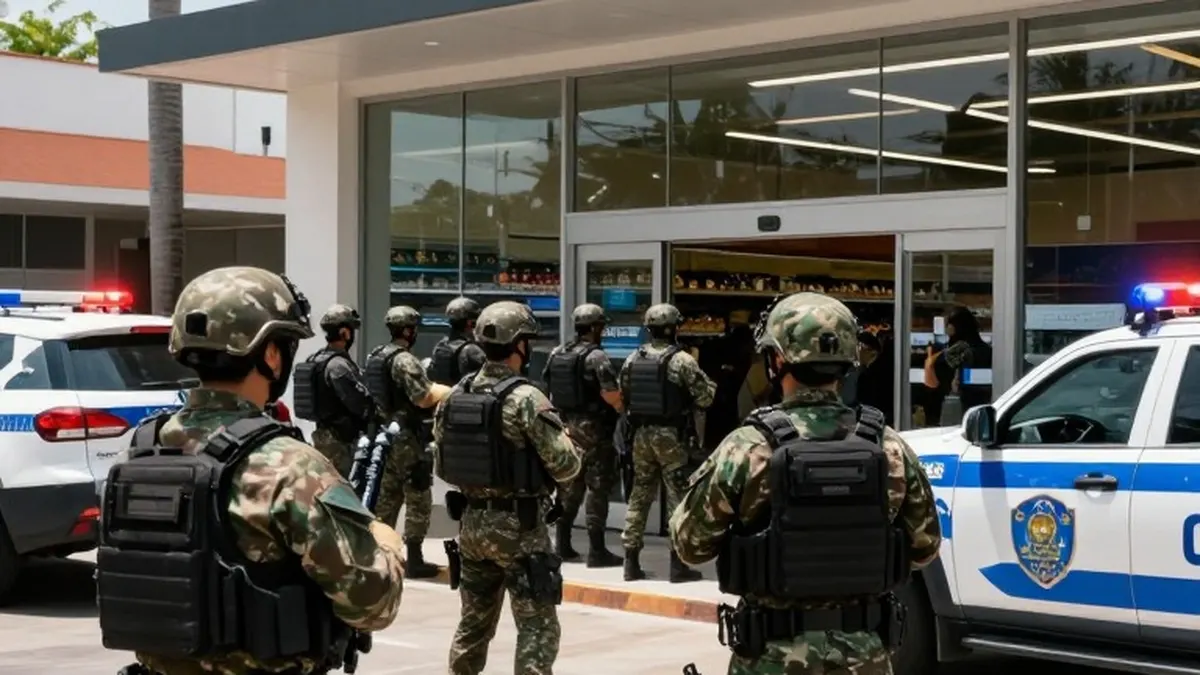
President Abelardo De La Espriella announced on Tuesday that thirty individuals were taken hostage inside a supermarket in Cartagena, Colombia. The crisis began when a group attempted to seize an armored vehicle transporting cash from a nearby mall. After security camera operators alerted police via a panic button, the suspects fled into the store, taking customers and staff with them.
The President stated that five older women had already been released from the group. He noted that all available security capabilities, including special units, were deployed to the scene. De La Espriella made these remarks from the city of Villavicencio, where he was visiting following a separate overnight car bombing that the government attributed to dissidents from the former FARC rebels.
Reuters footage displayed heavily armed military and police personnel gathered outside an Exito supermarket located in the La Castellana neighborhood. Cartagena is a major tourist hub, particularly for its walled colonial historic district, which attracts visitors from across Colombia and the rest of the world. Officials did not immediately release details regarding the identities of the hostage-takers or the remaining hostages.
Social media posts showed images of several people kneeling against the store windows, with their hands appearing to be bound. While Reuters could not independently verify these specific images, they provided a visual account of the situation prior to the official update. The Exito supermarket chain issued a statement confirming that protecting the safety of its people was their primary concern. The company said it was following the guidance of the relevant authorities handling the incident.
The operation caused brief disruptions to local air traffic. Rafael Nunez airport in Cartagena suspended landings for approximately 45 minutes. This pause allowed the armed forces to use one of the runways in connection with the rescue operation. Normal landing operations resumed once the military requirement was fulfilled.
The hostage situation in Cartagena occurred alongside another act of violence in the country. In Villavicencio, the capital of central Meta department, a car bomb exploded near government offices overnight. The blast injured twenty-two people and affected roughly 500 properties, including homes and businesses. Most injuries were minor, although one person required surgery and was reported to be in stable condition.
Villavicencio’s mayor, Alexander Baquero Sanabria, provided the initial casualty and damage reports. No group immediately claimed responsibility for the bombing in that city. However, the government has blamed a faction of dissidents from the FARC, who rejected the 2016 peace deal. This recent violence highlights the ongoing challenges in Colombia’s security landscape, where crime gangs and smaller rebel groups remain influential despite the historic peace agreement.
The 2016 peace deal between the government and the FARC celebrated its tenth anniversary this week. For over six decades, Colombia’s left-wing rebel groups have engaged in a civil war against the government and right-wing paramilitaries, a conflict historically fueled by the cocaine trade. While the deal brought some respite, the persistence of smaller rebel factions and powerful crime syndicates continues to pose significant threats to public safety.
President De La Espriella visited the site of the car blast in Villavicencio on Tuesday. He issued a strong warning to those responsible for the violence, referring to them as narcoterrorists. The President vowed that the attackers would answer for every drop of blood spilled and every property destroyed, asserting that the attack would not go unpunished.
Originally published by News Media House