
Democrats halt coalition talks with Yashar after unity government progress
The Democrats party suspended negotiations with Yashar after Yashar continued discussions with Likud, prompting a separate coalition agreement between Yashar and Yisrael Beytenu.
By News Media House Staff ·
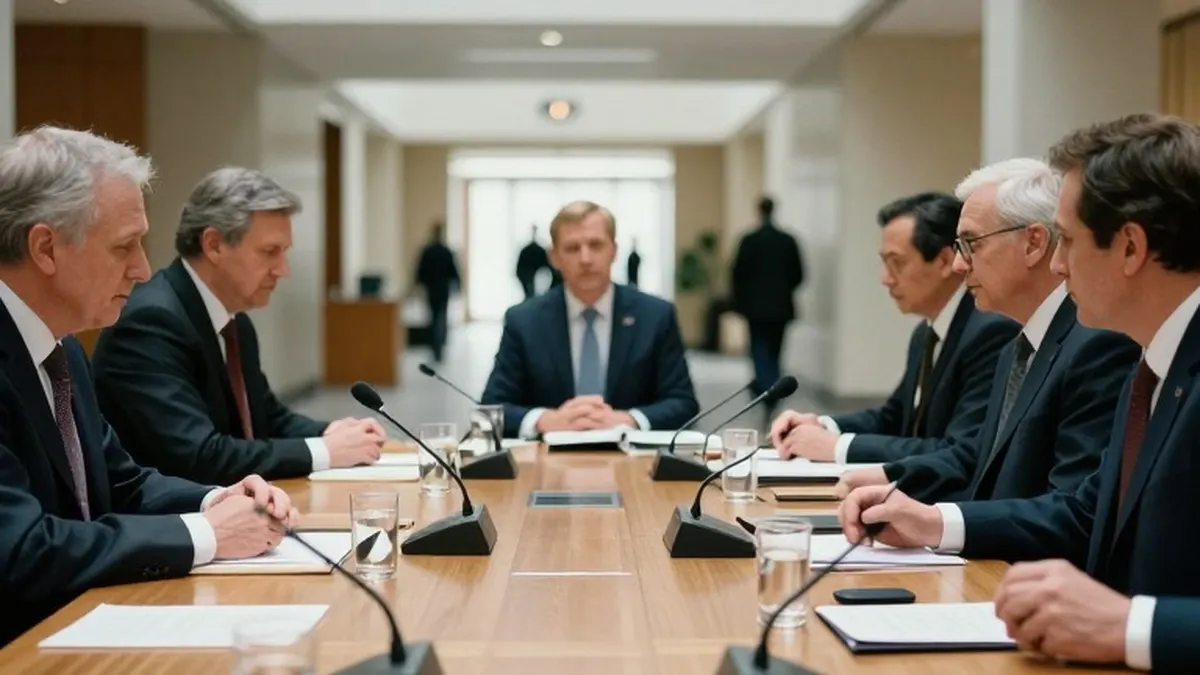
The Democrats party announced on Tuesday evening that it has stopped coalition talks with Gadi Eisenkot's Yashar party. This decision followed reports that Yashar continued negotiations for a unity government with Prime Minister Benjamin Netanyahu's Likud Party.
In a parallel development, Eisenkot met with Yisrael Beytenu leader Avigdor Liberman on Tuesday evening. The two parties agreed to sign a coalition agreement, signaling a shift in the post-election political landscape.
The announcement comes as Yashar and Likud are scheduled to hold their fourth day of unity government talks on Wednesday. Both parties had previously announced these ongoing discussions earlier in the week.
Yair Golan, leader of The Democrats, had consistently stated that his party would not join a government that included Netanyahu. This position remained firm throughout the recent period of negotiations between Yashar and Likud.
Netanyahu has repeatedly called for a unity government since his bloc lost its parliamentary majority following the October 27 election. The election results favored the bloc seeking to replace him, which won 67 seats, including 19 held by Arab parties, compared to 53 seats for Netanyahu's bloc.
Golan warned on Monday that keeping Netanyahu in power endangers the country's security and the lives of both serving military personnel and civilians. He emphasized that The Democrats would never agree to a unity government under Netanyahu's leadership.
The Democrats leader has advocated for the formation of a minority government. He also called for increased cooperation with Arab parties, specifically Ra'am and the Joint List, arguing that working with them should be seriously examined rather than ruled out in advance for what he described as ulterior motives.
No government has been formed yet because most party leaders have drawn a red line against partnering with the Arab parties. However, support from these parties has allowed the anti-Netanyahu bloc to advance key legislation in the Knesset while Netanyahu heads a caretaker government.
On November 8, President Isaac Herzog gave Eisenkot the mandate to form the next government. Eisenkot now has about two weeks to complete this task, with the option to request an additional 14-day extension if necessary.
The political situation remains fluid as parties navigate their alliances and attempts to secure a majority in the Knesset.
Originally published by News Media House





