Minister Ben-Gvir Faces Criticism Over Mosque Speaker Seizures
Critics accuse Israel's National Security Minister of provoking conflict by removing loudspeakers from mosques in the Negev, a move part of a wider pattern of enforcement actions.
By News Media House Staff ·
Parliamentarian Ahmad Tibi has accused Israel's National Security Minister Itamar Ben-Gvir of attempting to ignite a religious war following the recent confiscation of loudspeakers at two mosques in southern Israel. Tibi stated that Ben-Gvir, who is responsible for overseeing the police, is exploiting the current atmosphere of conflict to target religious infrastructure.
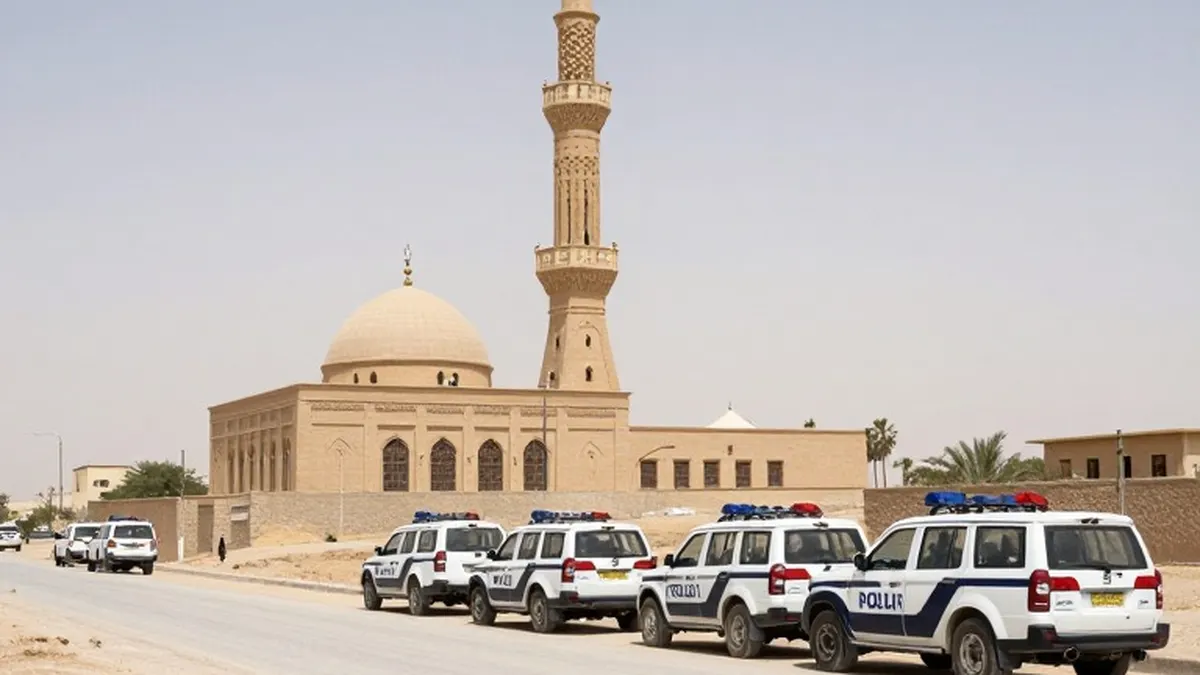
The latest incidents occurred in the Bedouin town of Hura and the nearby settlement of Tel al-Saba, also known as Tel Sheva. On Sunday, Israeli police disconnected the speakers at a mosque in Hura and removed the sound equipment. Just days before that, officers seized the sound system at the al-Dawa Mosque in Tel al-Saba. In both cases, police cited repeated noise complaints as the reason for the interventions.
Ben-Gvir, a far-right politician known for his vocal support of harsh policies toward Palestinians, defended the actions by stating that the noise levels from the mosques had exceeded acceptable limits. However, local residents and activists have challenged the official account. Ibrahim al-Asam, a resident of Tel al-Saba, noted that the speaker at al-Dawa Mosque was not excessively loud. He further reported that officers damaged the mosque during the raid and took the recorder connected to the security cameras.
Atiya al-Asam, who heads the regional council for Bedouin villages in the Negev, described the seizure as an assault on the faith of Muslims. He emphasized that the mosque in Hura is located far from residential areas and does not disturb neighbors. Al-Asam criticized the police for acting without a court order and called for the speakers to be returned.
This series of events has been linked by critics to a broader campaign of incitement against Palestinian citizens of Israel. Tibi accused caretaker Prime Minister Benjamin Netanyahu of delegitimizing opposition efforts to form a government with Arab-led parties. Netanyahu has previously accused these parties of supporting terrorism. Critics argue that such rhetoric and policies are connected to recent attacks on a mosque and an Arab city within Israel.
The recent seizures are part of a continuing pattern of enforcement actions by Israeli authorities. In April, loudspeakers were removed from a mosque in the Negev village of Bir al-Hammam, while another seizure took place in June at a mosque in Majd al-Krum in the northern Galilee region. During these periods, authorities also summoned several muezzins for questioning and warned mosques of potential fines.
The Palestinian monitoring group Mo'ta recorded at least 38 cases in 2026 where Israeli authorities invoked noise regulations against mosques, imams, or muezzins in Arab and mixed communities. Similar actions are occurring in the occupied West Bank. In December 2025, the Israeli military ordered mosques in Ras Tira, near Qalqilya, to lower the volume of the call to prayer, stating that the sound disturbed nearby settlements.
Mo'ta has reported attacks on 50 mosques in the West Bank, including 13 instances of arson. In Hebron, the Palestinian Ministry of Endowments and Religious Affairs reported that Israeli authorities had prevented the call to prayer at the Ibrahimi Mosque 1,009 times since the beginning of 2026.
Legislative efforts to formalize these restrictions are also underway. On July 1, the Knesset voted 50 to 36 in a preliminary reading for a bill that would prohibit mosques from using loudspeakers without government permission. The bill, sponsored by Zvika Fogel of the Jewish Power party, did not become law. However, the party announced on Monday that it would bring a new version of the bill for a parliamentary vote on Wednesday.
Originally published by News Media House