
Landmine Casualties Reach Five-Year High as Myanmar and Syria Drive Global Toll
A new report reveals that global landmine and unexploded ordnance casualties hit 6,929 in 2025, with Myanmar recording the highest death toll for the third consecutive year and Syria experiencing a sharp surge.
By News Media House Staff ·
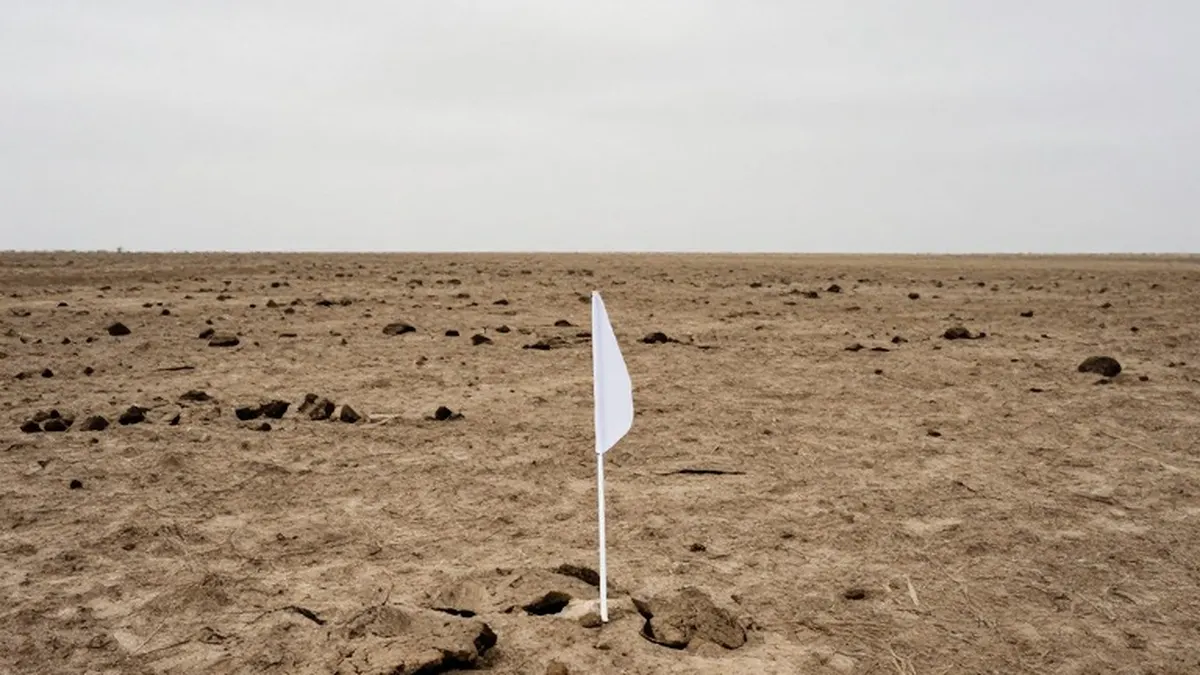
Global casualties from landmines and unexploded ordnance reached a five-year high in 2025, marking a significant deterioration in safety for affected populations. The International Campaign to Ban Landmines released a report indicating that the largest number of deaths occurred in Southeast Asia. This regional spike was largely driven by the ongoing civil war in Myanmar, which continued to generate a disproportionate share of victims.
Civilians remained the most severely affected group, accounting for approximately 84 percent of the 6,929 total casualties recorded in 2025. The data highlighted a tragic demographic detail: half of these civilian casualties were children. This statistic underscores the profound impact of these weapons on families and communities in conflict zones.
Myanmar recorded 1,891 deaths in 2025, securing the highest number of fatalities of any country for the third consecutive year. Both the government forces and various armed groups are currently using landmines in the conflict. The report calculated that, on average, five people are killed or wounded by these devices every day within the country.
Yeshua Moser-Puangsuwan, a co-author of the Landmine Monitor 2026 report, described the situation as moving beyond a crisis into a catastrophe. He noted that Myanmar has claimed the ignoble title of the top producer of landmine victims for a third year in a row. Moser-Puangsuwan added that contamination now exists at some level in almost two-thirds of the townships across the nation.
The region's impact is stark when viewed against population size. Myanmar, along with Cambodia, Laos, Vietnam, and other countries in the area, accounted for 27 percent of global landmine deaths in 2025. This occurred despite the region holding only 8 percent of the world's total population, highlighting the intensity of the hazard in this part of the world.
Syria also saw a dramatic increase in casualties, with a spike of more than 50 percent. The country recorded 1,602 deaths in 2025. This surge followed the fall of ousted President Bashar al-Assad in 2024, which led to large numbers of civilians returning to their homes. Moser-Puangsuwan described Syria as a post-war crisis, stating that returning people are driving the casualty figures and that the nation needs to radically scale up its clearance capacity.
The International Campaign to Ban Landmines continues to urge more nations to join the 1997 Mine Ban Treaty. The agreement aims to end the stockpiling, production, and transfer of antipersonnel mines. However, recent developments in Europe have complicated these efforts, with several bordering nations reconsidering their commitments.
Five countries on the borders with Russia, including Finland, Estonia, Latvia, Lithuania, and Poland, have pulled out of the treaty. These nations cited the security situation in their region as the primary reason for their withdrawal. Meanwhile, Ukraine notified the United Nations that it had decided to suspend the implementation of the treaty, a move that is technically not allowed under the treaty's provisions.
Russia, which is not a party to the treaty, has been making widespread use of mines in its invasion of Ukraine. The Landmine Monitor found that Ukraine has also been using these devices. Despite the withdrawals and suspensions, Lebanon, the Marshall Islands, and Tonga joined the Mine Ban Treaty during the reporting period. As a result, 162 countries are now bound by the agreement.
The report serves as a critical assessment of the global landscape of landmine hazards. It highlights the need for sustained international cooperation and robust national clearance efforts to protect civilians, particularly in regions where conflict remains active or has recently ended.
Originally published by News Media House





