Eisenkot Government Talks Advance as UTJ Secures Rabbinical Approval
United Torah Judaism has received rabbinical approval to continue talks with Gadi Eisenkot's bloc as the change camp explores minority and emergency government options.
By News Media House Staff ·
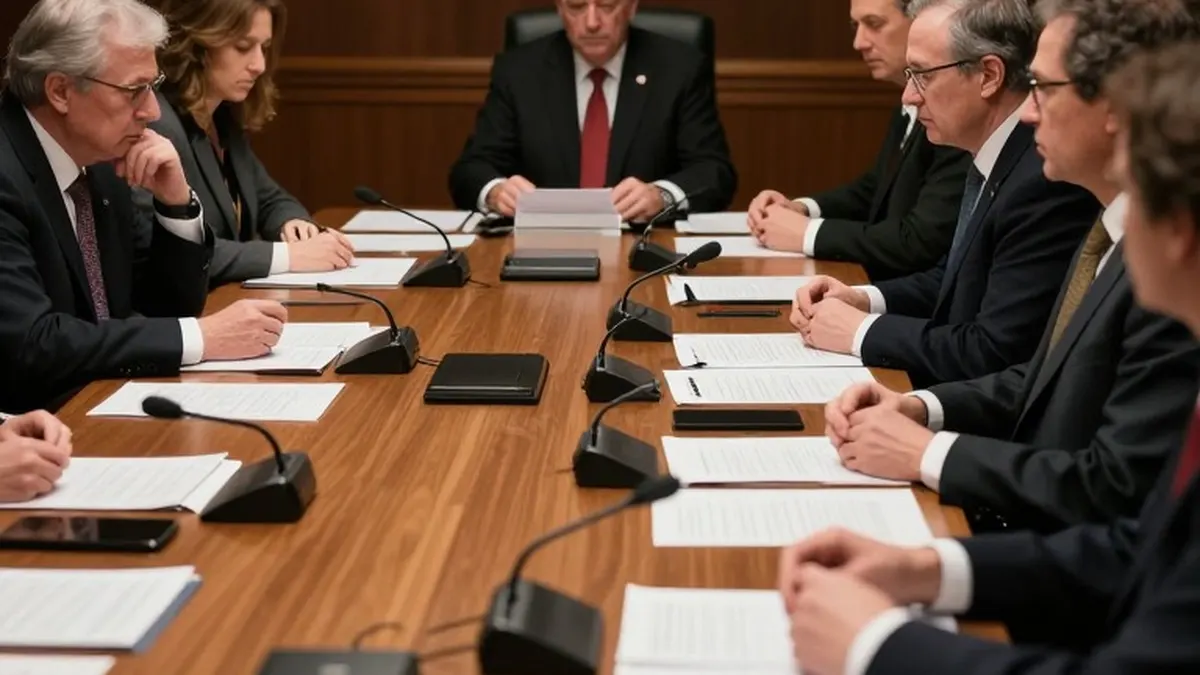
Negotiations to form a new government led by Gadi Eisenkot reached a pivotal moment on Tuesday, November 24, after United Torah Judaism MK Yakov Asher obtained permission from senior rabbis to continue discussions with the change bloc. Over the preceding day, Asher briefed the religious leadership on the status of the talks and received the green light to proceed. This development signals that informal conversations between the parties are set to intensify as the change bloc evaluates various strategies for establishing a government without finalizing full coalition agreements with the ultra-Orthodox parties.
One potential framework under review involves creating a minority government. This approach relies on the abstention of both Arab parties and United Torah Judaism during the Knesset confidence vote. If this scenario materializes, Eisenkot could secure a simple majority even if Shas votes against the government. This would allow the new administration to take office without requiring UTJ to formally join the coalition or cast a vote in its favor, though no agreement has yet been reached on this specific mechanism.
Another option being considered is the formation of a narrow, temporary emergency government. This entity would consist of only five or six key ministers and serve a short transitional period. During this time, intensive negotiations would aim to expand the coalition and secure broader agreements. If these efforts fail, the country would move toward new elections. This proposal is designed to facilitate government formation without waiting for all coalition details to be finalized.
Sources familiar with the process noted that these are just two of several frameworks being examined. No final decision has been made regarding Eisenkot’s ultimate approach. In preparation for the talks, UTJ MKs Yakov Asher, Yitzhak Goldknopf, Yitzhak Pindrus, and Meir Porush met at Asher’s office to coordinate their positions ahead of discussions with Eisenkot and Yisrael Beytenu chairman Avigdor Liberman. An external legal adviser is also expected to join the negotiating team.
While Rabbi Dov Lando had previously authorized the continuation of negotiations, the recent approval allows for further progress in the talks. However, this does not constitute authorization to join the government or support its swearing-in. Mutual distrust remains a significant factor, with the change bloc worried that haredi parties might secure commitments before returning to the Netanyahu-led bloc. Conversely, UTJ fears facilitating a government without receiving the promised legislation, particularly concerning haredi military conscription.
As a result, UTJ is demanding concrete guarantees ahead of the Knesset confidence vote. Both sides are currently examining legal and political mechanisms to facilitate an agreement. The change bloc is also preparing for the budgetary implications of these potential deals. The head of the Yashar negotiating team approached the budget commissioner to request a professional liaison to assist in drafting the agreements. Eisenkot’s party aims to conclude negotiations by the end of the week to bring a proposed government before the Knesset for approval early next week.
Despite these efforts, the possibility of a national unity government with Likud remains on the table. Sources indicate that another meeting with Likud representatives is expected later this week, although no official date has been announced. Likud continues to work to prevent United Torah Judaism from aligning with the change bloc. Former prime minister Benjamin Netanyahu recently met with Asher, while Transportation Minister Miri Regev warned that haredi participation in Eisenkot’s initiative would be a cause for regret for generations.
UTJ is aware of the pressure exerted by Likud and has maintained a low profile regarding the negotiations. The party has stated that reports of an agreed framework do not reflect the current situation and that any political move will be made exclusively under the direction of its rabbinical leadership. Although approval has been granted to advance the negotiations, the party has yet to authorize joining an Eisenkot-led government or supporting its establishment.
Originally published by News Media House