Fiona the Hippo Dies After Her Body Could Not Pass a Sunken Hat
Veterinarians explain why small objects like coins and shoes can kill large animals due to complex digestive systems.
By Riya Alvarez ·
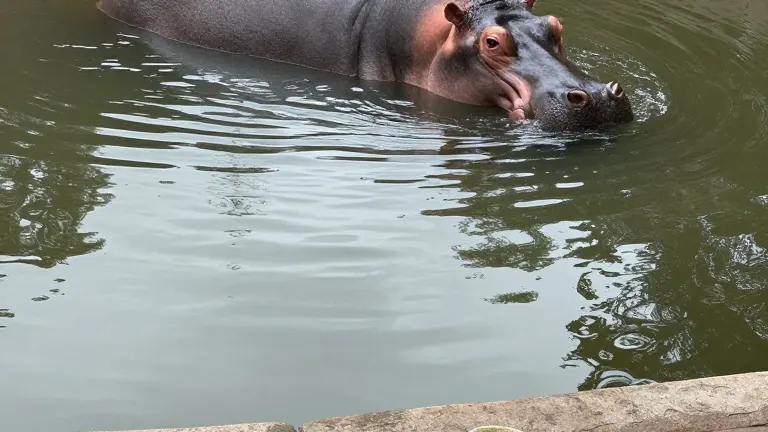
Fiona, a nine-year-old hippopotamus at the Cincinnati Zoo, died on Thursday. The cause was a hat that fell into her habitat. Zoo officials confirmed the item became lodged in her small intestine. Doctors determined that surgery was not possible.
Dave Jenike, the zoo director, stated that his team did everything possible to save her. He noted that the animal care team was heroic in their efforts. However, Fiona's body could not fight any longer.
This incident follows a pattern of animals ingesting foreign objects. In 2024, an alligator at the Henry Doorly Zoo and Aquarium in Omaha swallowed 70 U.S. coins. Staff successfully removed the coins. In 2025, a Komodo dragon at the Memphis Zoo ate a shoe. The shoe was removed, and the dragon survived.
Gabriella Flacke, an associate veterinarian at Zoo Miami, explained how vets retrieve these items. Sometimes, they use a camera and tools passed through the mouth. This method works for smaller objects. For larger items, surgery is required.
Flacke noted that retrieving items from an alligator is easier than from a hippo. Alligators have a single stomach divided into two parts. Hippos have a multichambered stomach. This structure makes it harder to remove objects.
Dr. Jen Quammen, president of the American Veterinary Medical Association, added to this explanation. He said the shape or size of the object is not always the main problem. The twists and turns of the digestive system often cause the issue. This applies to both metaphorical and physiological challenges.
Flacke advised visitors to be mindful of what they bring into exhibits. She suggested not wearing sunglasses on top of one's head while leaning over fences. Children often throw toys or objects. These items can land in animal enclosures unexpectedly.
Quammen and Flacke both emphasized the need for caution beyond the zoo. Animals explore by putting things in their mouths. This natural curiosity can be dangerous. People should store human medicines and dispose of trash properly. This protects pets and wildlife as well as zoo animals.
Quammen specifically warned against feeding animals without permission. This rule applies to household pets and wild animals. Keeping small objects out of reach is a simple way to prevent ingestion.
The zoo's experience with Fiona serves as a practical example of these risks. Visitors are asked to follow zoo etiquette. This includes not yelling at animals or throwing objects. Being aware of what is in one's pockets or hands helps keep the animals safe.